

Why Choose Ease Commerce for Warehouse Management?
Faster Order
Processing
Reduced delays and a lower number of processing errors as orders move through defined stages starting from confirmation, allocation, picking, dispatch, and invoicing without any manual tracking.
Clear Order Visibility Across Channels
Track marketplace, D2C, B2B, and Vendor Central orders in one dashboard. Monitor pending confirmations, processing timelines, and pickup status without switching between portals. That's real multichannel order management in one system.
Real-Time Inventory
Control
Keep stock updated across channels and warehouses, preventing overselling, reducing stock conflicts, and allocating orders based on real or near-real time availability. Accurate inventory is the foundation of reliable order management.
Error Detection Before Cancellations
Identify SKU issues, sync failures, and invoice gaps early. Ease Commerce makes highlighting operational errors easier so they can be corrected before they affect customers.
Vendor PO & Supplier Coordination
Manage Vendor Central POs, delivery windows, and shipment status inside the same workflow, which reduces compliance risks and keeps fulfillment on track.
Integrated Invoicing & Reconciliation
Orders connect directly to invoices, credit notes, and ledger entries. Finance teams get structured transaction tracking instead of manual spreadsheet reconciliation.
Explore Our Core Offerings
Built for brands that operate at scale across Amazon, D2C, B2B, and complex warehouse networks.
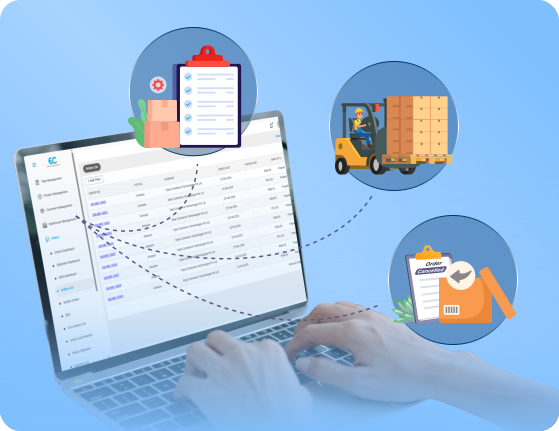
Multi-Channel D2C Order Management System

Unified Order Dashboard Across Channels
Manage Amazon, Shopify, Flipkart, and other marketplaces and website orders inside one simple, intuitive, and structured system without the need to switch portals and verify everything manually.
Real-Time Inventory Sync
Inventory updates instantly across warehouses and marketplaces, which prevents overselling during campaigns and high-traffic spikes.
Intelligent Warehouse Allocation
Reduce wrong dispatch and shipping delays when orders auto-route based on stock location, delivery SLA, and geography.
Cancellation & Return Sync
When customers cancel or return on any channel, the update reflects everywhere automatically, so there are less accidental dispatches and no refund confusion.
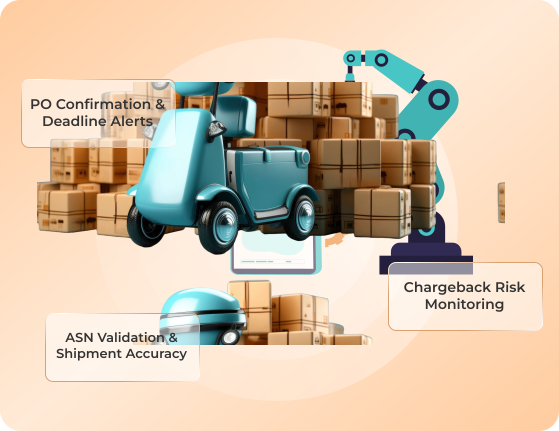
Amazon Vendor Central Automation Infrastructure
PO Confirmation & Deadline Alerts
Never miss PO acknowledgement timelines. System flags pending confirmations before they impact the scorecard.
ASN Validation & Shipment Accuracy
Prevent ASN mismatches, shortage issues, and labeling errors before dispatch. Reduce compliance penalties and chargebacks.
Delivery Window & Appointment Tracking
Track shipment booking, dispatch timelines, and compliance checkpoints all from one dashboard.
Chargeback Risk Monitoring
Identify operational gaps that typically lead to chargebacks. Protect margins while scaling PO volumes. Vendor growth is not about more POs. It's about fewer mistakes.

B2B & Distribution Order Management System
Structured B2B Order Workflows
Manage bulk purchase orders, partial dispatches, and staggered fulfillment in one system.
Credit Terms & Invoice Integration
Track credit cycles, invoice generation, and outstanding balances without spreadsheet tracking.
Distributor-Level Inventory Visibility
Allocate stock based on distributor region and priority logic. Avoid channel conflict between D2C and B2B.
Multi-Warehouse Coordination
Route large B2B orders from optimal warehouses based on stock depth and dispatch capacity. Enterprise B2B needs precision, not reactive management.

High-Volume Fulfillment & Finance Automation Layer
COD & Payment Reconciliation Engine
Automatically match courier remittance against delivered orders. Detect settlement gaps early and reduce revenue leakage.
Exception-Based Operations Dashboard
See stuck orders, sync failures, payment mismatches, and inventory conflicts instantly inside your order management software. Manage risk, not noise.
Return Lifecycle & QC Control
Track return reason, QC tagging, and inventory reintegration automatically. Prevent damaged stock from re-entering saleable inventory.
Role-Based Access Control
Separate warehouse, ops, vendor, and finance permissions to reduce internal data manipulation.
Performance Metrics With Impact
Order Accuracy Rate
Reduce SKU mismatches, wrong dispatches, and avoidable cancellations across channels.
Order-to-Dispatch Speed
Automate confirmation, allocation, and fulfillment to move orders out without bottlenecks.
Settlement & Reconciliation Accuracy
Auto-match COD, marketplace payouts, and invoices to prevent revenue leakage.
Frequently Asked Questions
It’s basically a system that centrally captures orders from marketplaces, D2C, B2B, and other sales channels, then validates inventory availability in real time before confirming the order. It automatically routes orders to the most suitable warehouse, manages picking and dispatch workflows, generates invoices, and tracks payment reconciliation. This structured order management process reduces manual intervention, prevents stock mismatches, and keeps fulfillment aligned as volumes scale.
Yes, Ease Commerce enables real-time inventory syncing from your website, warehouses, and marketplaces. As soon as an order is received, inventory updates across all channels. This prevents overselling, removes risks of last-minute cancellations, and supports campaign-day stock availability.
Yes. Automated order processing systems handle routing, tagging, bulk status updates, and rule-based allocation. Instead of manual handling, orders move through predefined workflows based on warehouse location, shipping rules, or priority flags. This reduces processing delays and human error.
The system monitors order timelines against predefined SLA benchmarks. It tracks confirmation time, processing time, pickup delays, and dispatch status in real time. If timelines exceed thresholds, alerts highlight potential SLA risks so teams can intervene before penalties or rating impact.
Yes. A centralized order dashboard shows warehouse-wise order queues and pending processing volumes. This helps operations teams identify bottlenecks, rebalance allocation, and maintain fulfillment efficiency across multiple warehouse locations.
Yes. Priority-based processing rules can be configured for express, VIP, or high-value orders. The system flags such orders and routes them through faster confirmation and dispatch workflows, ensuring SLA adherence without disrupting standard order flow.
Ease Commerce integrates warehouse management systems (WMS), courier APIs, and ERP platforms into one workflow. Return status updates flow automatically from courier tracking to warehouse inspection to financial reconciliation, reducing manual follow-ups and accelerating settlement cycles.
Yes. A centralized order management system consolidates marketplace, D2C, and B2B orders into a single Orders dashboard. All orders follow the same processing workflow regardless of channel. This reduces manual tracking and ensures consistent fulfillment across platforms.
Brands typically need an order management system when they sell across multiple channels, process thousands of monthly orders, operate multiple warehouses, experience stock conflicts or confirmation delays, or rely heavily on spreadsheets for tracking. When operational complexity begins affecting accuracy or speed, structured order management becomes necessary.
Order delays usually happen because confirmation, allocation, and dispatch are handled manually or across disconnected systems. To reduce delays, you need structured workflows, real-time visibility into pending orders, and automated routing to the right warehouse. When every order follows a defined process, bottlenecks become visible and easier to fix.
Orders stay in 'pending processing' when inventory validation, confirmation, or warehouse allocation is blocked. Common causes include stock mismatches, SKU mapping errors, system sync delays, or warehouse backlog. A centralized order management system helps identify exactly where the delay is happening instead of leaving teams guessing.