

Why Choose Ease Commerce for Task Management?
Operational Tasks Move
Faster
Manual follow-ups slow ecommerce teams down. Ease Commerce Task Management Software helps assign tasks easily with visible progress, and approvals move without back-and-forth effort, making listing updates, warehouse actions, marketing activities, and daily operations seamless.
Deadline & Priority Control
Every task comes with clear ownership, timelines, and priority levels, so teams understand what needs attention first. This reduces missed deadlines across catalog updates, marketplace operations, and everyday activities.
Real-Time Workflow
Visibility
See how work progresses across teams from one shared task management system. Managers get instant visibility into pending, work-in-progress, and completed activities without chasing updates across chats or spreadsheets.
Centralized Team Collaboration
Operations, marketing, warehouse, and support teams work from one platform. Conversations, attachments, and updates stay linked to tasks, improving accountability and reducing execution gaps.
Automated Recurring Operations
Daily marketplace checks, campaign monitoring, reconciliation tasks, and routine workflows can run automatically using scheduled auto-tasks, ensuring critical operations never get skipped.
Performance & Accountability Insights
Task dashboards provide clear visibility into workload distribution, task completion trends, and employee efficiency, helping leadership optimize productivity and plan operations better.
Explore Our Core Offerings

Simplified Project Management

Task Automation And Integration
Automate operational workflows across catalog updates, marketing execution, warehouse coordination, and marketplace activities. Ease Commerce simplifies task creation, ownership assignment, and execution tracking across teams from one centralized e-commerce task management system.
Deadline And Workflow Management
Structure daily operations with clearly defined deadlines, priorities, and workflow stages. Tasks move through organized execution flows, ensuring operational work progresses without dependency delays or missed actions.
Sub-Task Breakdown And Tracking
Break complex ecommerce processes into smaller, actionable steps. Track every stage of execution with detailed visibility so teams maintain control over listings, campaigns, reconciliations, and operational activities.
Integrated Notification System
Keep teams aligned with automated reminders, activity alerts, and deadline notifications. Members stay informed about updates and pending actions without relying on manual follow-ups.
Advanced Real-Time Task Monitoring
Immediate Task Visibility
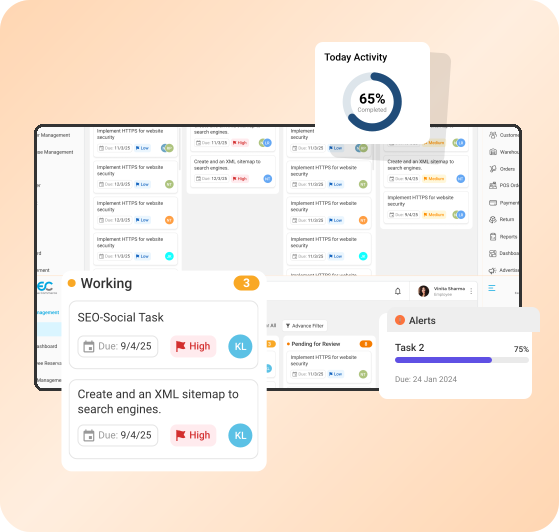
Gain real-time visibility into ongoing tasks across departments. Managers can instantly view pending, in-progress, and completed activities without switching between spreadsheets or communication tools.
Progress Tracking With Live Updates
Monitor execution status continuously through board, list, and dashboard views. Teams receive live progress updates, helping operations respond quickly to workflow bottlenecks.
Alerts For Instant Issue Resolution
Receive automated alerts when deadlines approach or tasks remain inactive. Early visibility enables teams to resolve operational delays before they impact marketplace performance.
Analytics For Data-Driven Decisions
Operational dashboards provide insights into workload distribution, completion trends, and execution efficiency, helping leadership optimize team productivity.
Synchronized Task Navigation
Fluid Task Transition
Ensure smooth handover of tasks between departments such as operations, warehouse, finance, and marketing without disrupting workflow continuity.
Precision Task Coordination
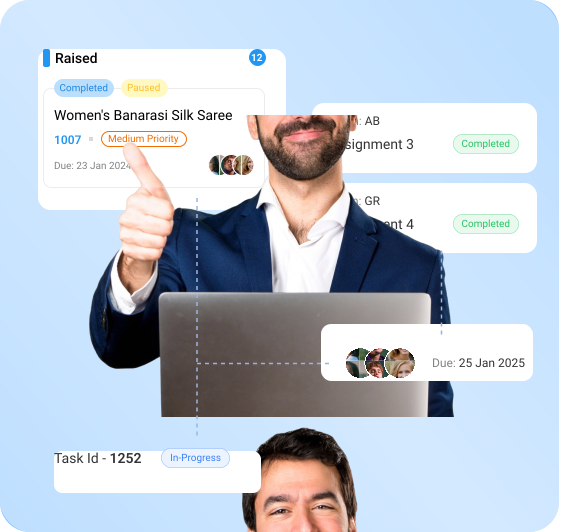
Manage multi-user assignments with structured ownership and approval tracking. Every task maintains clarity around responsibility and execution timelines.
Optimized Resource Allocation
Distribute workloads intelligently across teams based on availability and priority, improving execution speed while preventing operational overload.
Better Team Workflows
Maintain connected workflows where tasks progress seamlessly across stages, improving collaboration and reducing execution gaps.

Employee Reservation System
Visibility Into Team Availability
View employee schedules and workload capacity in real time through a system for task tracking that helps teams plan assignments with clear visibility into ongoing and upcoming work.
Advance Task Reservations
Reserve team bandwidth for critical ecommerce operations such as sale events, catalog launches, or campaign execution ahead of time.
Conflict-Free Scheduling
Prevent overlapping assignments through intelligent scheduling that automatically adjusts task timelines based on availability.
Dynamic Resource Rebalancing
Reallocate resources quickly as operational priorities change, ensuring teams stay productive during workload spikes.
Measured Impact Across Daily
Operations
Faster Task Closure
Less Follow-ups. More Work Getting Done.
Tasks don’t sit in WhatsApp chats or emails waiting for action. Every activity has an owner, deadline, and status visible to everyone involved. Issues get picked up earlier, and resolution happens before they slow operations.
Deadline Adherence
Work Moves Even When Managers Step Away.
Automated reminders and task ownership keep execution consistent across teams. Dispatch approvals, listing fixes, reconciliation checks, or warehouse actions move forward without someone manually pushing progress.
Better Team Efficiency
Managers can see workload distribution instantly and avoid overloading key operators. Teams stay productive during peak sales, launches, or daily order spikes without adding extra manpower.
Frequently Asked Questions
E-commerce task management software should go beyond basic task lists. It should connect tasks with real operations like order processing, inventory updates, warehouse actions, catalog fixes, and payment reconciliation. Key capabilities include ownership tracking, deadline automation, cross-team visibility, workflow-based task assignment, and performance dashboards that help managers identify execution delays early.
Order delays usually happen when confirmations, warehouse actions, or approvals depend on manual coordination. Task management software structures every operational step with clear ownership and timelines. Teams know exactly what needs action, which reduces processing gaps and keeps orders moving toward dispatch without internal follow-ups.
Yes. Modern e-commerce task management systems allow teams to create operational tasks linked to SKUs, listings, inventory corrections, or product approvals. This helps catalog, warehouse, and marketplace teams coordinate updates without miscommunication or duplicate work.
It centralizes execution across departments. Instead of tracking work through chats, emails, or spreadsheets, tasks move through defined workflows. Warehouse teams manage exceptions faster, finance tracks pending reconciliations, and operations teams resolve issues before they affect fulfillment timelines.
Look for workflow automation, role-based task ownership, real-time status tracking, inter-department collaboration, automated reminders, performance analytics, and integration with order management and inventory systems. These features ensure operational tasks directly support business outcomes.
Ease Commerce links tasks to operational timelines such as dispatch cutoffs, reconciliation cycles, or marketplace SLAs. Automated alerts and deadline tracking ensure responsible teams act before delays impact shipment commitments or customer experience.
Yes. Ease Commerce automatically assigns tasks based on workflow triggers like order exceptions, payment mismatches, or return inspections. Each department receives actionable tasks without manual escalation, improving coordination across teams.
Automated alerts notify teams when approvals, picking actions, or validations are pending. Instead of discovering issues late, teams intervene early, preventing shipment delays and operational bottlenecks.
Managers can track task completion rates, overdue activities, team workload distribution, operational bottlenecks, and resolution turnaround time. These insights help leadership improve execution efficiency and resource planning.
Every task has an owner, timeline, and status history. Managers can instantly see who is responsible and where execution is stalled, removing ambiguity and improving accountability across departments.
Tasks can be linked to orders, SKUs, or operational events across marketplaces and warehouses. Teams manage actions from a unified dashboard instead of switching between multiple platforms.
Automation removes manual handoffs between teams. When operational events trigger tasks automatically, approvals and actions happen faster, reducing fulfillment turnaround time.
Ease Commerce dashboards provide live visibility into pending tasks, team productivity, execution delays, and workflow efficiency. Managers can identify operational risks and rebalance workloads proactively.
Tasks move through predefined workflows where completion of one stage automatically triggers the next team’s action. This prevents coordination breakdowns during high-order-volume events.
Yes. Task management works alongside order management, inventory, warehouse, and CRM modules within Ease Commerce. Operational work stays connected to business data, ensuring execution decisions are always context-driven.